Google Inc is making its boldest move to take on Facebook in the fast-growing social networking market and to maintain its dominance on the Web. Google, which has been frustrated by a string of failed attempts to crack the social networking market, introduced a full-fledged social network on Tuesday dubbed Google+. It is the company's biggest foray into social networking since co-founder Larry Page took over as chief executive in April.
Page has made social networking a top priority at the world's No. 1 Internet search engine, whose position as the main gateway to online information could be at risk as people spend more time on sites like Facebook and Twitter.
'They had the luxury of making mistakes in the past with their social initiatives. They don't really have that luxury now,' said Ray Valdes, an analyst at research firm Gartner, referring to Google.
'Companies that are successful with the social web will get the page views, they'll get the engagement and they'll eventually get the advertising dollars that are so important to Google,' he said.
Google+, now available for testing, is structured in remarkably similar fashion to Facebook, with profile pictures and newsfeeds forming a central core. However, a user's friends or contacts are grouped into very specific circles of their choosing, versus the common pool of friends typical on Facebook. ( here )
Enticing consumers to join another social networking service will not be easy, said Rory Maher, an analyst with Hudson Square Research.
'They're going to have an uphill battle due to Facebook's network effects,' said Maher, citing the 700 million users that some research firms say are currently on Facebook's service.
'The more users they (Facebook) get, the harder it gets for Google to steal those,' he said. But he added that Google's popularity in Web search and email could help it gain a following.
To set its service apart from Facebook, Google is betting on what it says is a better approach to privacy -- a hot-button issue that has burned Facebook, as well as Google, in the past.
Central to Google+ are the 'circles' of friends and acquaintances. Users can organize contacts into different customized circles -- family members, coworkers, college friends -- and share photos, videos or other information only within those groups.
'In the online world there's this 'share box' and you type into it and you have no idea who is going to get that, or where it's going to land, or how it's going to embarrass you six months from now,' said Google Vice President of Product Management Bradley Horowitz.
'For us, privacy isn't buried six panels deep,' he added.
Facebook, which has been criticized for its confusing privacy controls, introduced a feature last year that lets users create smaller groups of friends. Google, without mentioning Facebook by name, said other social networking services' attempts to create groups have been 'bolt-on' efforts that do not work as well.
Facebook, in an emailed statement, said 'we're in the early days of making the Web more social, and there are opportunities for innovation everywhere.'
Google+ started rolling out to a limited number of users on Tuesday in what the company is calling a field trial. Only those invited to join will initially be able to use the service. Google did not say when it would be more widely available.
Google, which generated roughly $29 billion in revenue in 2010, said the new service does not currently feature advertising.
Google's stock has been pressured by concerns about rising spending within the company and increasing regulatory scrutiny -- not to mention its struggles with social networking. The U.S. Federal Trade Commission, among others, is currently reviewing its business practices.
Its shares are down almost 20 percent this year after underperforming the market in 2010.
To create Google+, the company went back to the drawing board in the wake of several notable failures, including Google Wave and Google Buzz, a microblogging service whose launch was marred by privacy snafus.
'We learned a lot in Buzz, and one of the things we learned is that there's a real market opportunity for a product that addresses people's concerns around privacy and how their information is shared,' said Horowitz.
Google drew more than 1 billion visitors worldwide to its websites in May, more than any other company, according to Web analytics firm comScore. But people are spending more time on Facebook: The average U.S. visitor spent 375 minutes per month on Facebook in May, compared with 231 minutes for Google.
Google+ seems designed to make its online properties a pervasive part of the daily online experience, rather than being spots where Web surfers occasionally check in to search for a website or check email.
As with Facebook's service, Google Plus has a central Web page that displays an ever-updating stream of the comments, photos and links being shared by friends and contacts.
A toolbar across the top of most of Google's sites -- such as its main search page, its Gmail site and its Maps site -- allows users to access their personalized data feed. They can then contribute their own information to the stream.
The company has combined the Facebook and Twitter models of social networking in Google+: A person can have friends in their network with whom they share information and they can also follow certain people, say a movie critic, as occurs on Twitter.
Google+ will also offer a special video chat feature, in which up to 10 people can jump on a conference call. And Google will automatically store photos taken on cell phones on its Internet servers, allowing a Google+ user to access the photos from any computer and share them.
When asked whether he expected people to switch from Facebook to Google+, Google Senior Vice President of Engineering Vic Gundotra said people may decide to use both.
'People today use multiple tools. I think what we're offering here offers some very distinct advantages around some basic needs,' he said.
Showing posts with label Tech news. Show all posts
Showing posts with label Tech news. Show all posts
Wednesday, 29 June 2011

Wednesday, 8 June 2011
Apple's Jobs unveils iCloud
Apple Inc CEO Steve Jobs unveiled services for people to store more of their photos, music and other data online, giving the iPad and iPhone maker the lead in a fast-expanding new consumer market. Jobs entered to a standing ovation from more than 5,000 Apple faithful at its Worldwide Developers' Conference on Monday and showed off Apple products meant to help customers keep their iPhones, iPads and computers in sync.
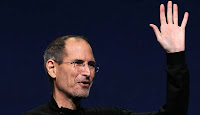 The Silicon Valley icon and pancreatic cancer survivor - animated but again looking very thin - unveiled remote computing services that for now at least push Apple ahead of rivals Google and Amazon.com, which recently launched their own moves into music storage and streaming.
Jobs, whose decision to headline the event assuaged some concerns on Wall Street about his health, didn't say a word about his condition but strode briskly onstage after James Brown's soul classic I Got You (I Feel Good) blasted over the sound system.
'We're going to move the digital hub, the center of your digital life, into the cloud,' Jobs said.
'Everything happens automatically and there's nothing new to learn. It just all works.'
In cloud computing, data and software are stored on servers, and devices like smartphones or PCs access them through the Internet.
With its knack for designing easy-to-use gadgets, Apple hopes to make cloud computing - right now a term tossed about mostly by corporate IT departments and Silicon Valley geeks - an everyday convenience for many people.
As more and more people use smartphones and tablets with limited storage, demand for cloud-based services is growing, and technology companies from Amazon to Zynga are rushing to stake out their turf.
Beyond storing music online, Apple's revamped operating systems for its Macs, iPhones and iPads integrate cloud storage in everything from word processing to calendars and to-do lists, going beyond what other companies have done.
'For the average consumer it makes cloud computing real,' said Mike McGuire, a media analyst with Gartner.
'What we saw from Amazon and Google were features, not services.'
Apple's new iTunes Match service will also scan users' hard drives and automatically make the songs it finds available on the iCloud. In contrast, users of Google and Amazon cloud-based storage have to upload every song themselves.
'This is potentially game-changing,' said Sterne Agee analyst Shaw Wu.
'It's a whole new way of computing where you're less dependent on PCs and local storage.'
Pie in the sky
Monday was only Jobs' second public appearance since he went on medical leave in January. He shared the spotlight, letting his executive team showcase new features in Apple's mobile and computer operating software.
'He is looking thin but as energetic as usual,' Current Analysis analyst Avi Greengart said, adding that Apple's expansion into remote computing 'is very powerful stuff.'
Apple's iCloud service is not a huge revenue generator for right now and it is tough to quantify longer-term impact, but it lays the foundation for future products with the push into cloud computing, Wall Street analysts say.
With that infrastructure in place, Apple can look to streaming video, a lucrative opportunity rivals also covet.
But complex licensing requirements for distribution of video content mean that the business may be farther off than music cloud services.
The most immediate impact might come from the iTunes Match feature that Jobs introduced with his signature 'one more thing' line.
Costing $25 a year, it yields a fresh source of revenue for Apple and the music industry - and from songs that customers would be unlikely to buy again. Apple has been busy wrapping up negotiations with major record labels to secure licenses for its cloud service.
Apple's move to cloud services could also ignite more demand for devices from the iPhone to the iPad, while helping sales of music through iTunes.
'Relative to iCloud, Google and Amazon are far behind. Nobody else can do what Apple's doing today,' said Brian Marshall, an analyst with Gleacher & Co.
'They are doing music, they are doing photos, documents. The next will certainly be video,' Marshall said.
Jobs' decision to headline such events often is news in itself, and his appearance likely heartened investors worried about his health after the pancreatic cancer survivor went on his third medical leave for an undisclosed condition.
Apple's share price fell 1.6% to close at $338.04 on the Nasdaq stock market. The stock traditionally gains before a major event - of which there are only a handful through the year - before dipping on the day itself.
'They telegraphed in advance what they were going to say and that Steve Jobs was going to show up,' said Daniel Ernst at Hudson Square Research.
'It's pretty boring, which is, for Apple, bad. It's all good, but everybody always expects them to walk on water unfortunately.'
Reuters

Jobs, whose decision to headline the event assuaged some concerns on Wall Street about his health, didn't say a word about his condition but strode briskly onstage after James Brown's soul classic I Got You (I Feel Good) blasted over the sound system.
'We're going to move the digital hub, the center of your digital life, into the cloud,' Jobs said.
'Everything happens automatically and there's nothing new to learn. It just all works.'
In cloud computing, data and software are stored on servers, and devices like smartphones or PCs access them through the Internet.
With its knack for designing easy-to-use gadgets, Apple hopes to make cloud computing - right now a term tossed about mostly by corporate IT departments and Silicon Valley geeks - an everyday convenience for many people.
As more and more people use smartphones and tablets with limited storage, demand for cloud-based services is growing, and technology companies from Amazon to Zynga are rushing to stake out their turf.
Beyond storing music online, Apple's revamped operating systems for its Macs, iPhones and iPads integrate cloud storage in everything from word processing to calendars and to-do lists, going beyond what other companies have done.
'For the average consumer it makes cloud computing real,' said Mike McGuire, a media analyst with Gartner.
'What we saw from Amazon and Google were features, not services.'
Apple's new iTunes Match service will also scan users' hard drives and automatically make the songs it finds available on the iCloud. In contrast, users of Google and Amazon cloud-based storage have to upload every song themselves.
'This is potentially game-changing,' said Sterne Agee analyst Shaw Wu.
'It's a whole new way of computing where you're less dependent on PCs and local storage.'
Pie in the sky
Monday was only Jobs' second public appearance since he went on medical leave in January. He shared the spotlight, letting his executive team showcase new features in Apple's mobile and computer operating software.
'He is looking thin but as energetic as usual,' Current Analysis analyst Avi Greengart said, adding that Apple's expansion into remote computing 'is very powerful stuff.'
Apple's iCloud service is not a huge revenue generator for right now and it is tough to quantify longer-term impact, but it lays the foundation for future products with the push into cloud computing, Wall Street analysts say.
With that infrastructure in place, Apple can look to streaming video, a lucrative opportunity rivals also covet.
But complex licensing requirements for distribution of video content mean that the business may be farther off than music cloud services.
The most immediate impact might come from the iTunes Match feature that Jobs introduced with his signature 'one more thing' line.
Costing $25 a year, it yields a fresh source of revenue for Apple and the music industry - and from songs that customers would be unlikely to buy again. Apple has been busy wrapping up negotiations with major record labels to secure licenses for its cloud service.
Apple's move to cloud services could also ignite more demand for devices from the iPhone to the iPad, while helping sales of music through iTunes.
'Relative to iCloud, Google and Amazon are far behind. Nobody else can do what Apple's doing today,' said Brian Marshall, an analyst with Gleacher & Co.
'They are doing music, they are doing photos, documents. The next will certainly be video,' Marshall said.
Jobs' decision to headline such events often is news in itself, and his appearance likely heartened investors worried about his health after the pancreatic cancer survivor went on his third medical leave for an undisclosed condition.
Apple's share price fell 1.6% to close at $338.04 on the Nasdaq stock market. The stock traditionally gains before a major event - of which there are only a handful through the year - before dipping on the day itself.
'They telegraphed in advance what they were going to say and that Steve Jobs was going to show up,' said Daniel Ernst at Hudson Square Research.
'It's pretty boring, which is, for Apple, bad. It's all good, but everybody always expects them to walk on water unfortunately.'
Reuters
Saturday, 4 June 2011
Google Apps to stop supporting older browsers
Google is phasing out support for older browsers from 1 August.
Those using IE7, Safari 3, Firefox 3.5 and their predecessors to view Gmail, Google Calendar, Talk, Docs and Sites will then lose some functions.Eventually, it warned, these web services will stop working for those sticking with older browsers.
The move is part of a trend to stop the use of ageing browsers which can be insecure and not sophisticated enough to handle the latest web technologies.Code malfunction Statistics on browser versions gathered by StatCounter suggest about 17% need to change in the light of Google's decision.Google made its announcement in a blogpost saying its engineers were keen to make use of the latest capabilities in browsers, and that required support for HTML5 technology.
As a result, from 1 August, Google will only support what it calls "modern browsers". By this it means the latest versions and major prior releases of Chrome, Firefox, Internet Explorer and Safari.
As new versions of these are released, Google will get its web services working with that and then drop support for the third-oldest version.Support in this sense means that Google will only do compatibility testing with more up-to-date browsers. It will not carry out tests with older programmes and can make no guarantees that web services will work with them.
Concluding the blogpost, Venkat Panchapakesan, vice president of engineering at Google, wrote: "These new browsers are more than just a modern convenience, they are a necessity for what the future holds."
In mid-May, Mozilla, which oversees development of Firefox, kicked off a plan to get the 12 million or so people using version 3.5 of its browser to update.It said it was "frustrated" with efforts to get people to upgrade and had taken a series of steps to force change.It used pop-up screens, adverts, re-directs and updates to steer people towards more recent versions of Firefox.Figures gathered by Mozilla suggest the campaign has had some success as the number of users on Firefox 3.5 has now dropped to about one million.
Microsoft's campaign to stop people using Internet Explorer 6 is one of the longest running upgrade efforts.
The software giant has used its automatic update system to get newer versions of its browser out to many users.However, many companies prefer not to use this system and that has meant IE6 clinging on in some firms and nations.Globally about 11% of browsers are IE6, suggest figures compiled by Microsoft, and there is a wide variation around the world.
About 34% of Chinese net users are on IE6, as are 22.3% of South Koreans and 11.6% of Vietnamese people.
Subscribe to:
Posts (Atom)